
The internationally renowned research centre in Shetland was destroyed by fire in March 2019. Situated on Fair Isle, an island between Orkney and Shetland spanning less than five square miles and with a population of just 50, the location is regarded as one of the best places in Europe to see rare birds.
With a new and improved building on the remote island estimated at £7.4m, innovative logistics solutions were required to transport the people and materials needed to complete the project.
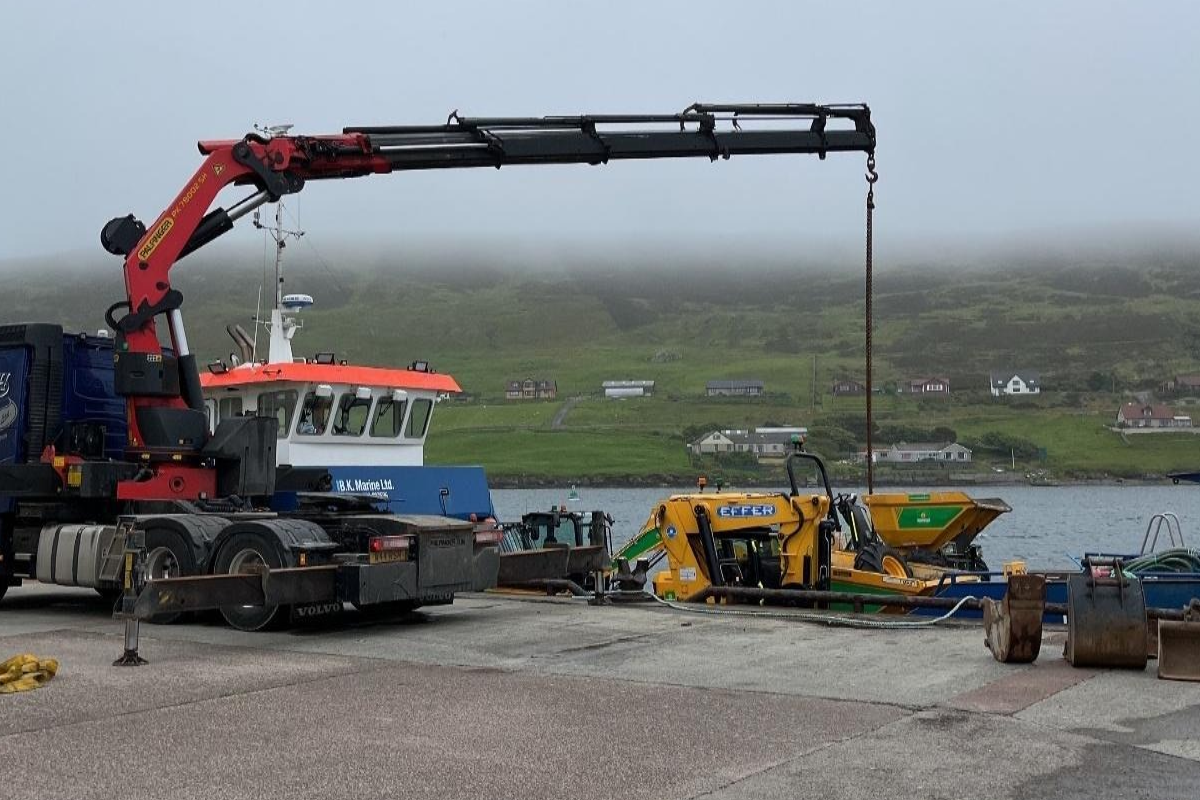
JW Civils was commissioned to undertake groundworks for the Fair Isle Bird Observatory redevelopment. Due to the island’s remote location and limited infrastructure, all personnel, materials, and plant had to be transported by ferry or barge, requiring careful logistical planning, phased delivery, and a flexible approach to changing weather conditions.
Quick Facts
Location
Shetland
Client
Fair Isle Bird Observatory
Industry
Commercial
Line of Business
Charitable Trust
Remote Island Access & Weather Dependency
Challenge: Transport could only be carried out via the Good Shepherd VI ferry or chartered barges, both heavily influenced by maritime weather and sea swell. High winds or rough seas could halt all deliveries and personnel movement for days at a time.
Work-around: JW Civils planned materials in priority-based tranches and created contingency buffers. Essential items were shipped early, and non-critical deliveries were scheduled around forecasted weather windows. Operatives remained on the island for extended periods to maintain project momentum during transport delays.
Limited Plant and Equipment Capacity
Challenge: Fair Isle’s landing infrastructure could only accept small plant, restricting machinery choice. Larger equipment typically used for groundworks was not transportable.
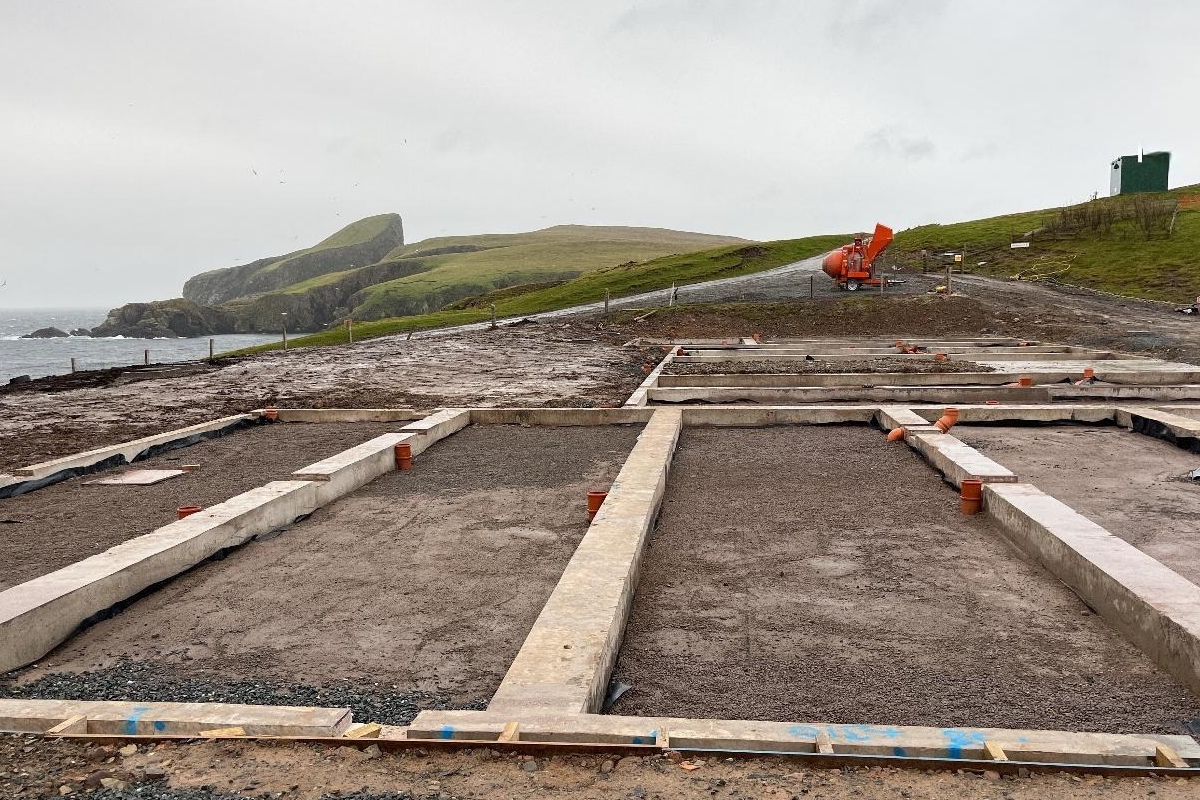
Work-around: The team optimised operations by utilising a 2.5-ton excavator for all excavation and handling tasks. Work sequencing was adjusted to maximise efficiency with smaller equipment, and formwork fabrication was completed manually on site by joiners.
No Ready-Mix Concrete Supply
Challenge: Due to the island’s isolation, no ready-mix concrete trucks could reach the site.
Work-around: JW Civils established a dedicated concrete-mixing station and produced all concrete on the island in small, controlled batches (approx. 0.33 m³). This required precise coordination of aggregate and cement deliveries and consistent manpower to maintain throughput.
On-Island Accommodation Constraints
Challenge: Fair Isle had extremely limited housing for workers, and long-term stays were unavoidable.
Work-around: JW Civils converted “The Puffin” into functional shared accommodation. Timber partitions were constructed to create private sleeping areas, and bespoke beds and storage units were built on site. Welfare provisions ranging from water barrels and extension leads to first-aid kits, waterproofs, and even recreational items were shipped to maintain wellbeing during extended deployment.
Challenging Terrain and Manual Handling Requirements
Challenge: Undulating ground and limited vehicle access meant certain areas, particularly the plant room duct route required extensive manual handling.
Work-around: Ducting and materials were transported in smaller loads and installed progressively along a 150 m uphill route. Gravel and drainage materials were distributed using the excavator and manual labour where plant access was restricted.
Project Execution
Initial Deliveries & Welfare Setup
Initial deliveries consisted of sundries and small plant, including essential welfare and safety provisions such as toiletries, life jackets, first-aid kits, water barrels, extension leads, torches, waterproof clothing, and miscellaneous site equipment. Recreational items such as board games and a BBQ were also provided to support staff welfare during the extended stay.
Accommodation for up to eight operatives was established in The Puffin. JW Civils constructed timber partitions to create individual sleeping areas and installed beds, storage chests, and general living facilities.
Site Preparation
Foundations and Structural Works
Concrete Works
Services and External Works

Whether you require expert civil engineering, high-quality groundworks, or bespoke landscaping solutions, JW Civils is here to help. With over 40 years of experience, we are “small enough to care, big enough to deliver.”
Contact us today for a fast, professional quote and expert advice on your next project.
Contact Details Email: enquiries@jwcivils.co.uk
Tel: 01695 411574
Head Office: 3C Selby Pl, Skelmersdale WN8 8EF
If you have questions or comments about our stores, products or services, we’d like to hear from you.